Letter Boxed vs Wordle: Which NYT Word Puzzle Is Right for You?
You open your phone for a quick brain break and two word games are staring back at you. Wordle wants you to guess a hidden word in six tries. Letter Boxed game gives you twelve letters on a square and says connect them all. Same NYT Games app, same daily format, totally different experience.
If you have tried one and wondered whether the other is worth your time, or if you are brand new to both and just want to pick the right one, this guide breaks it all down. By the end you will know exactly which game fits your brain, your schedule, and your puzzle style.
What Is the Difference Between Wordle and Letter Boxed?
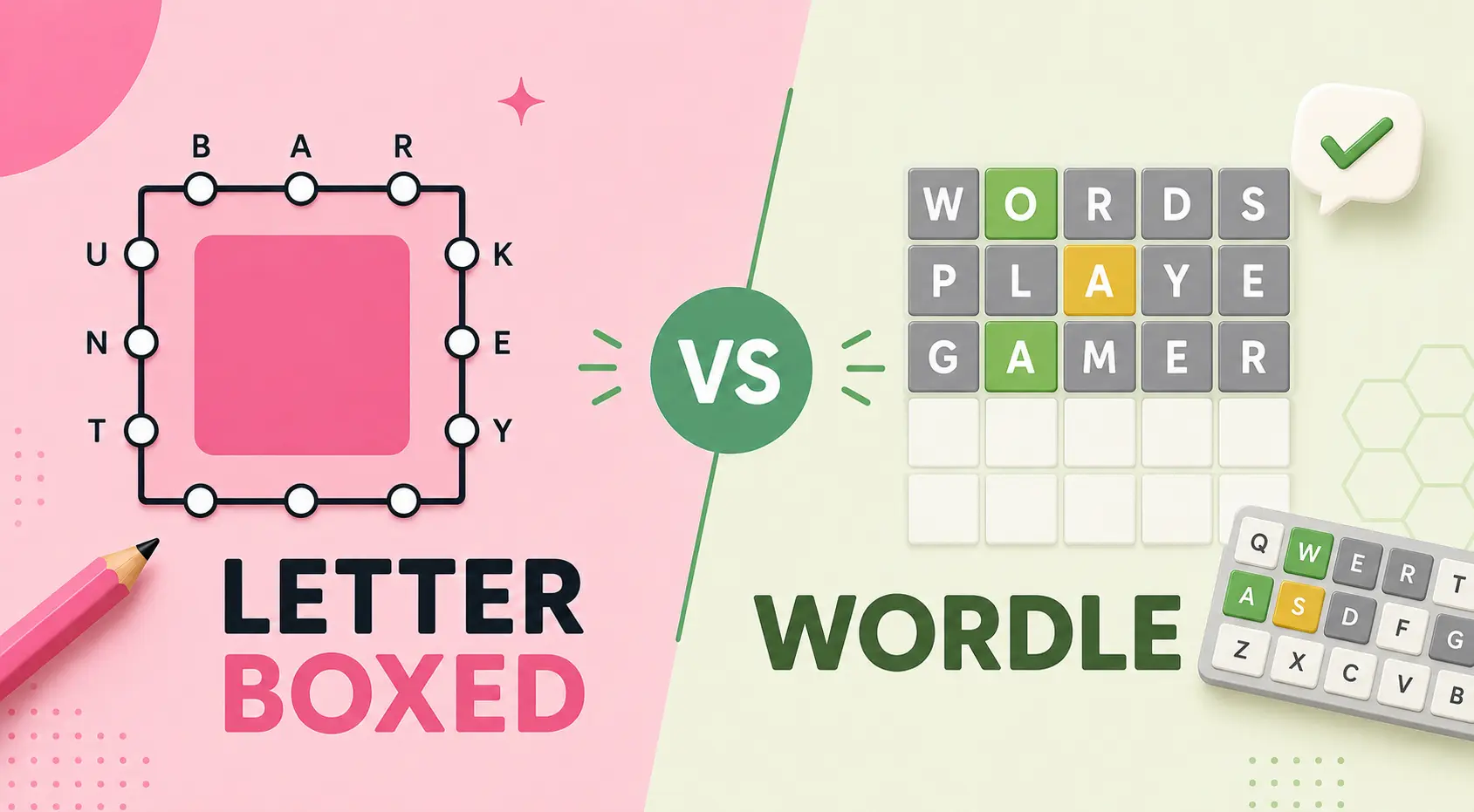
The core difference is simple. Wordle is about guessing a word. Letter Boxed is about building words. One uses logic and elimination. The other uses creative word construction and chain planning.
How Letter Boxed Works
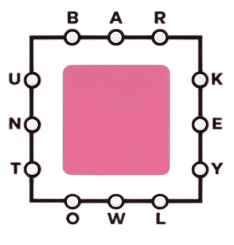
You get twelve letters arranged around a square, three on each side. Your job is to use every letter at least once by building a chain of connected words. Each new word must start with the last letter of the previous one.
The key rule is you can never use two letters from the same side back to back. The fewer words you use the better. A two word solution is the gold standard, but three or four words still counts as a win. Play the Letter Boxed puzzle free and see how quickly you can clear the board.
How Wordle Works
You get a hidden five letter word and six attempts to guess it. Type any valid word and the game gives you color feedback. Green means the right letter in the right spot. Yellow means the right letter but wrong spot. Gray means the letter is not in the word at all.
Use those clues to narrow it down guess by guess. Most players finish in under five minutes. The rules take about thirty seconds to learn and the color system makes sense after one round. Play the Wordle puzzle for free at New York Time Site.
Letter Boxed vs Wordle: Quick Comparison
| Feature | Wordle | Letter Boxed |
| Gameplay | Guess a hidden 5 letter word | Build word chains around a square |
| Core Skill | Logic and elimination | Vocabulary and chain planning |
| Time per Session | 2 to 5 minutes | 5 to 30 minutes |
| Feedback | Color clues after each guess | None, you figure it out yourself |
| Difficulty | Easy to pick up | Harder to start, more rewarding |
| Social Appeal | Shareable colored grid | Word list, less shareable |
| Best For | Quick thinkers | Deep thinkers |
Both games reset daily with a fresh puzzle. But the way they challenge you could not be more different, which is why picking the right one matters.
Which Game Should You Play?
This is the part most people came here for. Here is the short version based on your player type.
| Your Type | Play This | Why |
| Quick daily habit | Wordle | Done in under 5 minutes |
| Logic and deduction fan | Wordle | Color feedback guides every move |
| New to word puzzles | Wordle | Easiest learning curve |
| Love sharing results | Wordle | The colored grid is built for social media |
| Vocabulary builder | Letter Boxed | New words every session |
| Strategy and planning fan | Letter Boxed | Every move sets up the next one |
| Scrabble or crossword lover | Letter Boxed | Same deep word thinking |
| Want a real challenge | Letter Boxed | No hints, no feedback, just you and the board |
| Want the full experience | Play Both | Wordle in the morning, Letter Boxed when you have time |
If you read “quick daily habit” and nodded, start with Wordle. If “real challenge” got your attention, go with Letter Boxed. You can always add the other one later.
Which Game Is Harder?
Most players find Letter Boxed harder and it is not even close. The gap becomes clear the moment you understand how each game helps you (or does not help you) reach a solution.
Why Wordle Feels Easier
Wordle is built to keep you moving forward. Every guess gives you new information so you never feel completely lost.
The color feedback narrows your options after each attempt. Only one correct answer exists so there is no decision overload. Six attempts give you plenty of room to recover from early mistakes. And the format never changes so your strategy improves naturally with practice.
Most players solve Wordle successfully the majority of the time. The game is genuinely designed for you to win.
Why Letter Boxed Feels Harder
Letter Boxed gives you almost no help. A word either counts or it does not. The game will not tell you if you are getting closer or wasting moves.
There is no feedback system to guide your next word. You have to plan chains while keeping the side switching rule in mind. A single bad word can leave you with letters that refuse to connect. And the two word solution requires thinking about the entire board at once, not just one word at a time.
Many experienced Wordle players try Letter Boxed and hit a wall on their first attempt. The puzzle just sits there and waits for you to figure it out on your own. If a board has you completely stuck, our free Letter Boxed hints can give you just enough of a push to finish the puzzle yourself.
How Strategy Works in Each Game
The thinking behind each game is completely different. Wordle is about narrowing down. Letter Boxed is about opening up.
Wordle Strategy
Start with a strong opening word that covers common English letters. Words like CRANE or SLATE are popular first guesses because they test the most useful letters right away.
From there, let the color feedback guide every decision. Cut gray letters completely and build on green and yellow clues with each new guess. Use your second guess to test new letters rather than confirming ones you already know about.
The best Wordle players are not the ones with the biggest vocabulary. They are the ones who read the clues carefully and eliminate options fast.
Letter Boxed Strategy
Scan the full board before typing anything. Look for long words first because they clear more letters in a single move and leave fewer leftovers.
Always think about what letter your word ends on because that becomes the forced starting point for your next word. Ending on common letters like S, R, T, or C keeps your options wide open. Ending on Q, X, or Z usually traps you.
Target the hardest letters early. If the board has Q, J, X, or Z, build your first word around them while you still have the full board available. Saving them for last is how most players get stuck.
The best Letter Boxed players think two words ahead before they type word one.
Which Game Builds Your Brain Better?
Both games train your brain but in very different ways. The better choice depends on what kind of thinker you want to become.
Wordle Trains Logical Thinking
Regular Wordle play builds pattern recognition across common English word structures. You get better at reading color feedback, eliminating wrong answers, and making smart decisions with limited information.
It is a daily exercise in structured reasoning. You learn to think clearly under mild pressure and make confident choices when you do not have the full picture. Those skills carry over to other logic based challenges beyond word games.
Letter Boxed Trains Vocabulary and Creativity
Letter Boxed pushes your vocabulary much harder. You cannot rely on a short list of common words to get through it. The game rewards players who think flexibly and are willing to dig into less familiar territory.
Regular play builds a deeper word range, stronger word association skills, and creative problem solving ability. You start seeing how one word’s ending naturally connects to another’s beginning. That kind of flexible thinking transfers to writing, brainstorming, and everyday communication.
Using Both Together
If your goal is vocabulary growth, Letter Boxed offers more long term value. If you want sharper logical thinking and daily mental focus, Wordle delivers that consistently. Playing both is the smartest move because they train completely different skills and take different amounts of time.
Common Mistakes in Each Game
Wordle Mistakes
Wasting guesses on random words with no strategy is the biggest one. Another common mistake is reusing gray letters in future guesses when the game already told you they are not in the answer. And many players use their second guess to confirm letters they already know instead of testing new ones.
Letter Boxed Mistakes
Making short words that leave difficult leftover letters is the classic trap. Players also save hard letters like Q and X for last, which almost always leads to a dead end. Ending words on rare letters traps your chain. And chasing long impressive words that only cover two sides of the board is worse than a shorter word that touches all four sides.
Is Letter Boxed Free Like Wordle?
Wordle is completely free with no subscription needed. You visit the NYT Games site, play the daily puzzle, and that is it. No account required.
Letter Boxed offers one free puzzle per day on the NYT Games website and app. Access to older puzzles and extra features requires a paid NYT Games subscription. The free daily puzzle is enough for most casual players.
The subscription covers all NYT puzzle games including Wordle, Letter Boxed, Spelling Bee, Connections, Strands, and the Crossword. If you play more than one game regularly it is solid value.
Other NYT Word Games Worth Trying
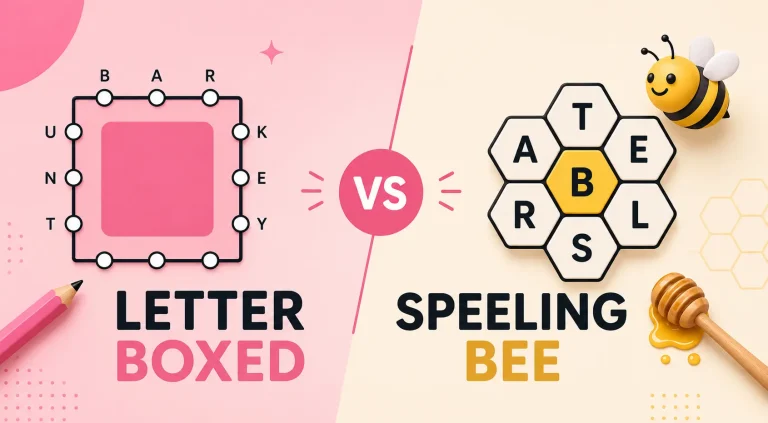
If you enjoy either of these games you will probably like the rest of the NYT Games collection too. Spelling Bee gives you seven letters and asks you to find as many words as possible using the center letter in every word. It rewards patience and vocabulary breadth, which makes it a very different experience from Letter Boxed, our Letter Boxed vs Spelling Bee comparison breaks down exactly how the two differ. Connections asks you to group 16 words into four hidden categories. Strands is a themed word search where answers connect to each other. And the NYT Crossword is the classic clue based puzzle that has been running for decades.
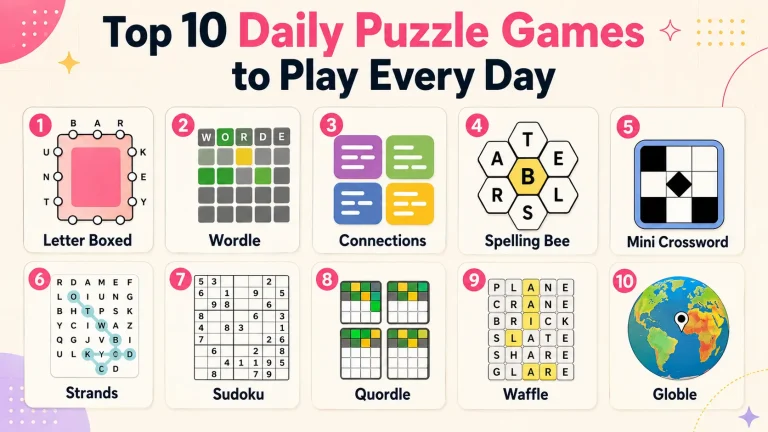
Each game works a different part of your brain. Together they make a strong daily puzzle routine. If you want even more options beyond the NYT collection, explore our list of daily puzzle games that keep your brain sharp with a fresh challenge every morning.
Final Verdict
Neither game is better. They just serve different players.
Pick Wordle if you want a fast, low pressure daily habit built around logic. It takes minutes, fits any schedule, and stays satisfying without asking too much of your time or energy.
Pick Letter Boxed if you want a deeper challenge that pushes your vocabulary and creative thinking. The puzzles take longer, require more patience, and feel genuinely rewarding when you crack them efficiently.
And if you cannot pick just one, you do not have to. Use Wordle as your morning warm up and save Letter Boxed for when you have time to really think. They train different skills, they take different amounts of time, and together they give you the complete NYT word puzzle experience.