Letter Boxed vs Spelling Bee: Which NYT Puzzle Fits Your Brain Best?
You open the NYT Games app, see both Letter Boxed puzzle and Spelling Bee sitting right there, and you honestly don’t know which one to tap first. Maybe you tried one and it felt too hard. Maybe you played both but never stuck with either. You are not alone. Thousands of players ask the same thing every day.
Here is the good news. These two puzzles are built for completely different types of thinkers. Once you know which brain type you are, the choice becomes obvious. This guide gives you everything you need to pick the right game, play it better, and actually enjoy your daily puzzle time.
What Is the Difference Between Letter Boxed and Spelling Bee?
Letter Boxed is a strategy game that uses words. Spelling Bee is a word game that rewards patience. They sit on the same NYT Games page but they feel nothing alike once you start playing.
How Letter Boxed Works
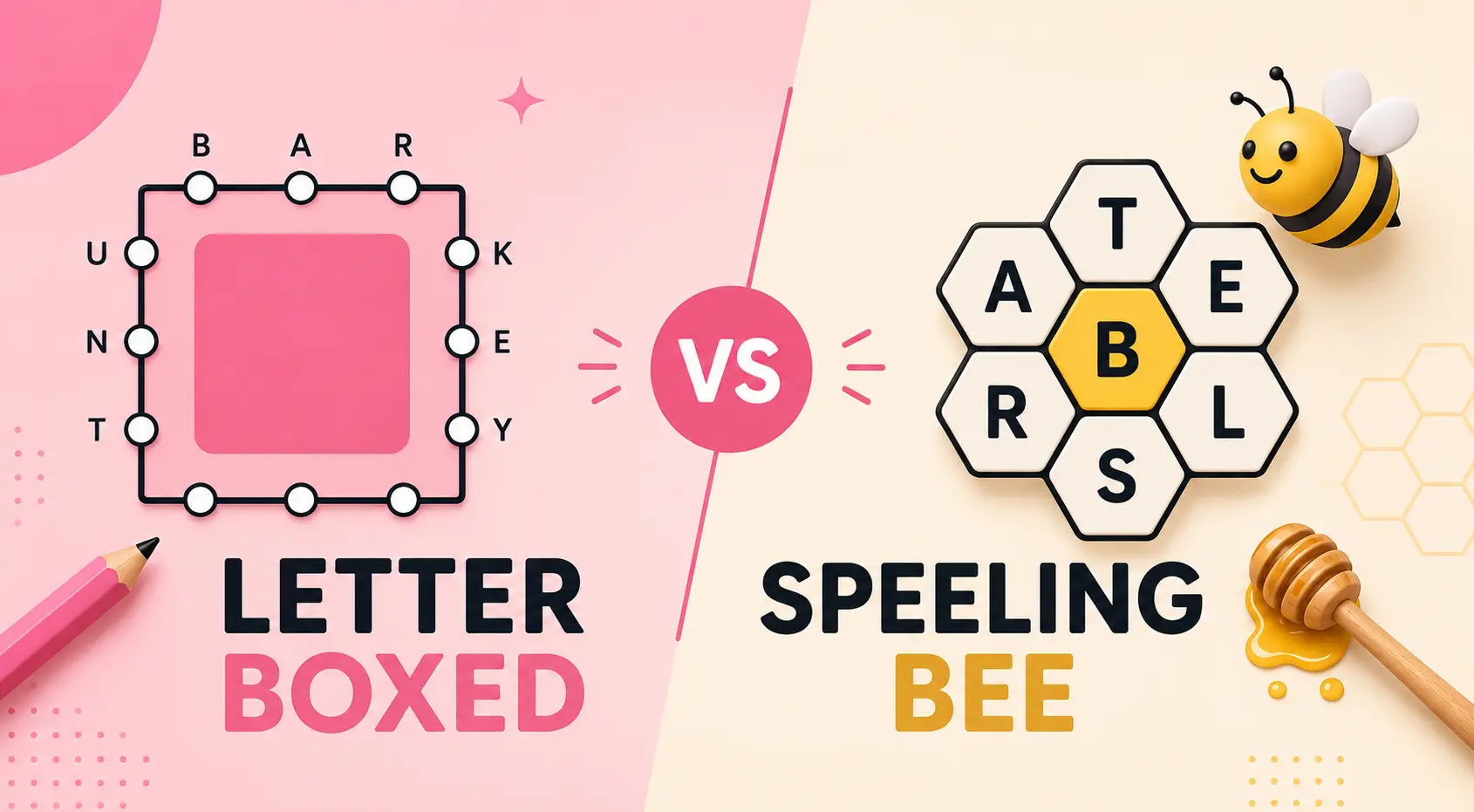
You get a square with 12 letters, three on each side. You make words by connecting letters across the square. The catch is you cannot use two letters from the same side one after the other.
Your goal is to use every letter at least once in as few words as possible. Every new word must start with the last letter of the word before it. This creates a chain. Two word solutions exist for every puzzle but most players need three or four words to clear the board. Ready to try it? Play the Letter Boxed game free and test your word chaining skills.
How Spelling Bee Works
You get seven letters in a honeycomb shape. The center letter must appear in every word you make. You can reuse any letter as many times as you want.
Words earn points based on length. Your rank climbs from Beginner through Nice, Solid, Great, and Amazing all the way up to Genius. The top rank is Queen Bee, which means you found every single valid word in that puzzle.
Every puzzle has at least one pangram, a word that uses all seven letters. It gives you bonus points and finding it early is one of the best feelings in any NYT word game.
Letter Boxed vs Spelling Bee: Quick Comparison
| Feature | Letter Boxed | Spelling Bee |
| Gameplay | Word chains around a square | Words from 7 honeycomb letters |
| Core Skill | Planning and spatial thinking | Vocabulary and pattern recognition |
| Time per Session | 3 to 6 minutes | 15 to 40 minutes |
| Difficulty | Solve it or fail, no middle ground | Gradual ranks from Good to Queen Bee |
| Best Moment | Clean 2 word solution | Finding the pangram |
| Vocabulary Growth | Moderate | High |
| Best For | Strategy lovers | Language lovers |
Now that you see how different they are, the real question is which one matches the way your brain works.
Which Puzzle Should You Play?
This is probably why you clicked this article. So let’s get straight to it.
| Your Type | Play This | Why |
| Strategic thinker | Letter Boxed | You love planning several moves ahead |
| Chess or logic fan | Letter Boxed | Same type of step by step problem solving |
| Short on time | Letter Boxed | Done in under 6 minutes |
| Vocabulary lover | Spelling Bee | New words every single session |
| Language learner | Spelling Bee | Teaches word families and root patterns |
| Patient explorer | Spelling Bee | Rewards being thorough over being fast |
| Evening relaxer | Spelling Bee | Low pressure 20 to 40 minute session |
| Want both benefits | Play Both | Letter Boxed mornings, Spelling Bee evenings |
If you read “strategic thinker” and felt that was you, start with Letter Boxed. If “new words every session” got your attention, go with Spelling Bee. You can always add the other later because they actually work well together.
Which Puzzle Is Harder?
This comes up all the time and the honest answer is they are hard in totally different ways.
Letter Boxed is harder to finish. You either use all 12 letters or you fail. There is no partial score. On tough days even regular players walk away without solving it.
Spelling Bee is harder to master. Finding a few words is easy. But climbing from Genius to Queen Bee means knowing words most people have never used in normal conversation. Even after months of daily play, most players rarely hit Queen Bee.
Why Letter Boxed Feels Tough
Letter Boxed punishes you for thinking one word at a time. You have to think in chains. Where does this word end? Can that ending letter actually start a useful next word?
The side rule makes it even trickier. Even a real word can ruin your progress if it traps you in a corner. One wrong move and the whole path falls apart. There are no hints, no ranks, no partial wins. You either solve it or you don’t. If a board has you completely stuck, our free Letter Boxed solver can find valid word chains in seconds so you can study the solution and learn from it.
Why Spelling Bee Feels Tough
Having a big vocabulary helps but it does not guarantee success. The puzzle accepts words most people never use in real life. Old terms, rare verb forms, and unusual plurals all count. Meanwhile common words sometimes get rejected.
The hardest part is not knowing a word. It is remembering every version of it. You might find TAUT but miss TAUTLY. You might try REBEL but skip REBELLING. The center letter adds another wall because dozens of words in your head might not contain that one required letter.
How Strategy Works in Each Game
The biggest mistake players make is treating both puzzles the same way. They need completely different thinking.
Letter Boxed Strategy
This is a closed puzzle. There are only a few correct paths and you need to find one. Before typing anything, scan the full board first.
Find the tough letters like Q, X, Z, or J. Build your first word around those because they only get harder to use later. End your first word on a common letter like E, R, S, or T so your next word has plenty of options.
The best players trace a rough path through all 12 letters in their head before they type a single word. Think of it less like a word game and more like route planning.
Spelling Bee Strategy
This is an open puzzle. There are dozens of valid words and your goal is to find as many as you can.
Start by looking for the pangram. It uses all seven letters and gives the biggest point jump. Many experienced players will not move on until they find it.
After that, work through word families. If THINK works, immediately try THINKS, THINKER, THINKING, and RETHINK. Then cycle through common endings like ED, ER, ING, LY, and RE on every root word you spot.
Use the shuffle button often. Rearranging the letter layout helps your brain see new combinations. It sounds too simple but it works every time.
Which Game Builds Your Brain Better?
Both puzzles train your brain but in different areas.
Spelling Bee is the stronger vocabulary builder. Each session throws new words at you that you would never find through normal reading. Over time you start seeing Latin and Greek roots, recognizing word families, and spelling gets sharper because you type every letter yourself.
Letter Boxed builds mental agility. It trains you to see how words connect to each other, how one ending becomes the next beginning. That kind of chain thinking helps with crosswords, anagrams, and other word puzzles too.
Want both benefits? Play Spelling Bee for vocabulary and Letter Boxed for quick strategic thinking. Together they cover the full range of brain training that NYT word games offer.
Common Frustrations With Each Game
Every puzzle has moments that make you want to close the app. Here are the ones players complain about most.
Letter Boxed: You placed 10 letters perfectly and the last two will not form a word with anything you have left. You typed a real word and the game rejected it. You solved it in four words then found out someone did it in two.
Spelling Bee: You are one word from Genius and you have been staring at the same letters for twenty minutes. The game rejects everyday words but accepts something you have never heard of. You check the answers and the missing word was embarrassingly obvious.
The Reddit community at r/NYTSpellingBee shares these exact frustrations daily. There is real comfort in knowing thousands of other players also missed a simple four letter word.
Tips to Get Better at Both Games
Letter Boxed Tips
Target the hardest letters first. Build your opening word around Q, X, Z, or J before they become impossible to use. End words on common letters to keep your options open for the next move.
Think in pairs, not single words. Plan at least two words ahead before you start typing. A short three letter word can sometimes unblock a dead end when longer words are not working.
Spelling Bee Tips
Hunt the pangram early because it gives the biggest point boost. Start with four letter words to clear the lower ranks fast. When you find a root word, immediately test every version of it with common endings.
Step away when you are stuck. A five minute break often surfaces words your tired brain was skipping. Coming back fresh is not giving up. It is a real strategy.
Do You Need to Pay for Letter Boxed or Spelling Bee?
Both games offer a free daily puzzle on the NYT Games website and the NYT Games app on iOS and Android. One fresh puzzle per day, no cost.
Spelling Bee limits free players to the first few rank levels. Reaching Genius or Queen Bee needs a paid NYT Games subscription. Letter Boxed gives full daily access for free but past puzzles are behind the paywall.
The subscription covers all NYT puzzle games including Wordle, Connections, Strands, and the Crossword. If you play more than one game regularly it pays for itself quickly.
Other NYT Word Games Worth Trying
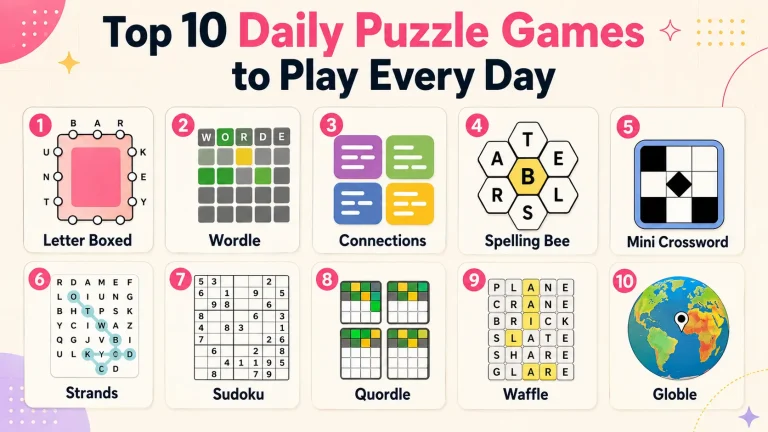
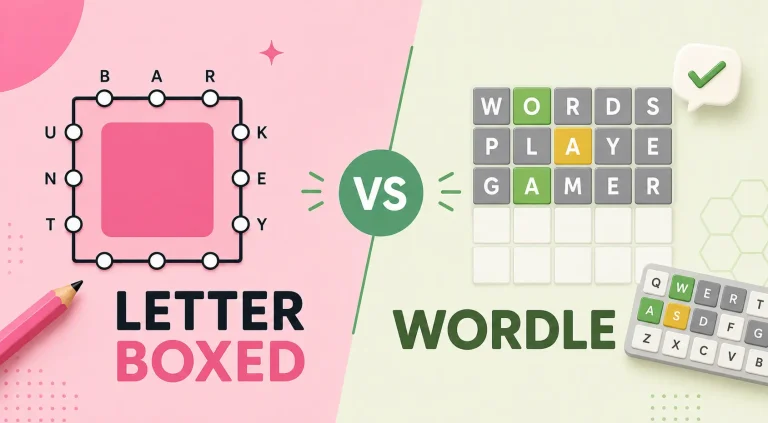
If you enjoy Letter Boxed or Spelling Bee you will probably like the rest of the NYT Games lineup too. Wordle is the five letter guessing game that made NYT puzzles go viral. It shares the same daily format as Letter Boxed but the gameplay is completely different, our Letter Boxed vs Wordle comparison explains exactly how they differ. Connections asks you to group words into four hidden categories. Strands is a themed word search where answers connect to each other.
Each one works a slightly different part of your brain. Together with Letter Boxed and Spelling Bee they make a strong daily puzzle routine. If you enjoy having a fresh challenge every morning, browse our collection of daily puzzle games for even more options beyond the NYT lineup.
Final Verdict
By now you should have a clear picture of which puzzle fits your brain.
Letter Boxed is for you if you want something fast, strategic, and satisfying in under ten minutes. You plan ahead, you solve the chain, and you move on with your day feeling sharp.
Spelling Bee is for you if you enjoy taking your time, discovering new words, and watching your rank climb session after session. It is the kind of game that makes you smarter without feeling like work.
And if you still cannot pick just one, you do not have to. Play Letter Boxed as your morning warm up and Spelling Bee as your evening wind down. They train different skills, they complement each other perfectly, and together they give you the complete NYT word puzzle experience.