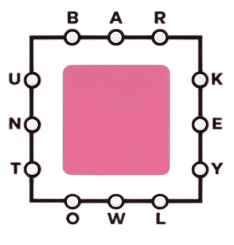
Letter Boxed Answers Today: Free Solver, Hints and Word Chain Finder
You opened today’s Letter Boxed puzzle, tried a few words, and hit a wall. Maybe one stubborn letter refuses to fit anywhere. Maybe you built a great chain and then the game rejected your word for no obvious reason. Now you are here, and that is completely fine.
This page has everything you need to get unstuck right now. A free solver (Tool) that finds valid word chains in seconds, spoiler free hints if you want just a small push, and a full breakdown of how the puzzle actually works. Whether you want the direct answer or just enough help to finish it yourself, you are in the right place.
Boxed
Finding the best word combinations…
🛠️ Letter Boxed Tool: Find Your Answer Instantly
The solver is at the top because that is what most people come here for. Enter the three letters from each side of today’s square, hit solve, and get up to 10 valid word chains that use every letter. No subscription, no login, no tricks.
This is not just a word list. The solver checks the actual game rules before showing you anything. Every chain it returns follows the same side rule, the chain rule, and covers all 12 letters. You can trust the results to work when you type them into the real NYT puzzle.
📋 How to Use the Solver in 4 Steps
Open today’s Letter Boxed puzzle on the NYT Games page and note the three letters on each side.
Enter those letters into the solver, one side per row. Order within each side does not matter.
Choose how many words you want to aim for. Most players start with 2 or 3.
Click Solve and review the results. Pick the chain that works best for you.
The whole process takes less than 30 seconds. The solver does the heavy lifting. Your only job is to copy the letters correctly.
⚙️ How the Solver Finds Valid Word Chains
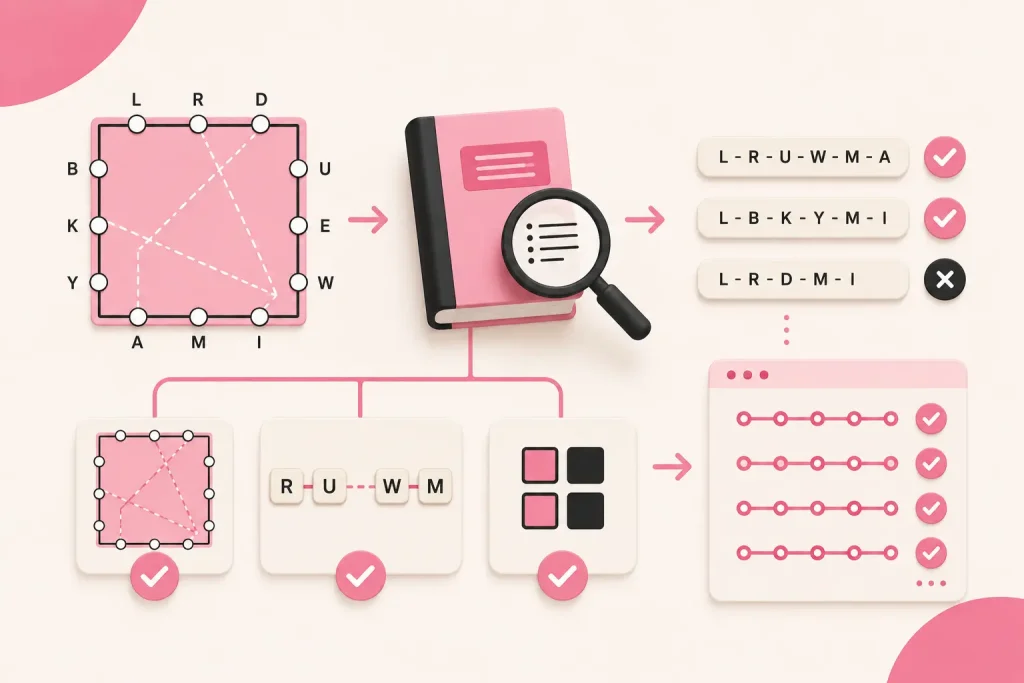
The solver works through a curated dictionary of over 4,100 words and tests every possible word pairing against your specific letters. For each chain, it checks whether every letter gets used, whether words connect correctly, and whether no word breaks the same side rule.
The result is a clean list of chains that actually work in the game. Many other tools just dump a word list without checking the side rule, which leads to answers that fail when you try them. This solver only shows playable solutions.
🔁 Why You See Multiple Solutions
Most puzzles have dozens of valid solutions, not just one. The solver shows up to 10 so you have choices. A 2 word chain is the genius solve and the hardest to find. A 3 word chain is what most players land on. A 4 word chain is still a complete win.
Two players can solve the same puzzle with completely different word chains and both be correct. If the solver gives you a word you have never heard of, it is still valid. The puzzle rewards creative vocabulary, not just common words.
🔄 Using the Refresh Button
The solver caps results at 10, but today’s puzzle might have 30 or 40 valid chains. If you do not like the first batch, hit refresh with the same letters. You will often get a different set of results drawn from the full pool of valid solutions.
This helps when you know a specific word exists on the board but it is not showing up in the first run.
💡 Today’s Letter Boxed Hints: Help Without Spoilers
Not everyone wants the full answer right away. Sometimes you just need a small push to keep going without ruining the satisfaction of finishing it yourself. Read one hint at a time and stop whenever you feel ready to continue on your own.
Hint 1: How many words does today’s puzzle need?
Most days have a strong two word solution. If your 3 or 4 word chain is not coming together, the most efficient path might actually be shorter than you think.
Hint 2: Which letter should you start with?
Start with one of the harder or rarer letters on the board. Letters with fewer connections need to go early while you still have the full board available.
Hint 3: Look for a long word first.
Find a word with 7 or 8 letters that covers most of the board. Long first words leave a clean set of remaining letters for one final word.
Hint 4: The bridge letter matters most.
One letter connects your first word to your second. It is the last letter of word one and the first letter of word two. Look for a bridge letter that starts many common words.
Hint 5: First letter of word two.
The second word in today’s best solution starts with a letter you have probably been struggling to place. Knowing this, search for words beginning with that letter that cover whatever is left.
Most players find that Hint 1 or Hint 2 is all they need. Only use Hint 5 if you have tried everything else.
❓ What Is a Letter Boxed Answer?
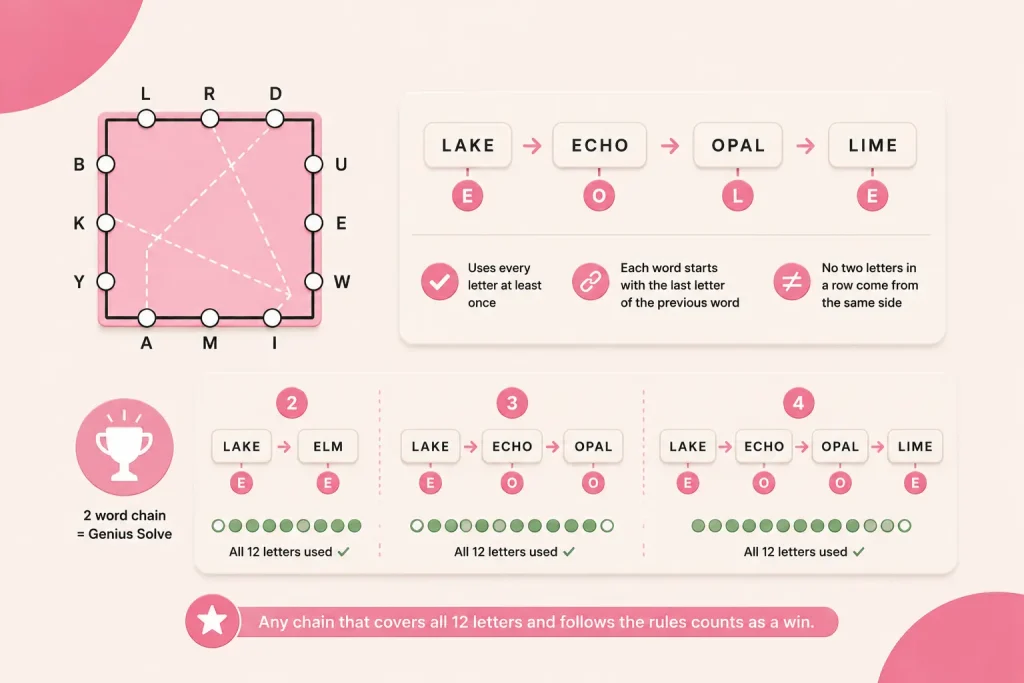
A Letter Boxed answer is the complete chain of words that uses every letter on the square at least once. It is not a single word. It is a sequence where each word starts with the last letter of the word before it, and no two letters in a row come from the same side.
The NYT considers a 2 word chain the best result, called a genius solve. But chains using 3 or 4 words are perfectly valid too. Any chain that covers all 12 letters and follows the rules counts as a win.
🔀 Why Most Puzzles Have Many Valid Solutions
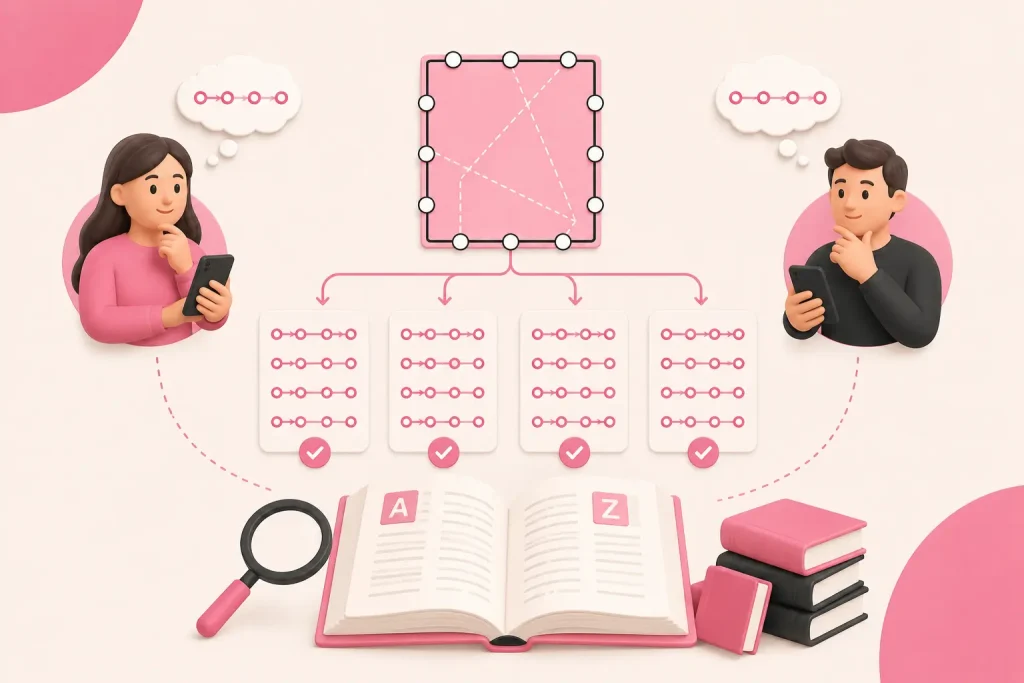
The puzzle only requires that all letters get used. It does not require specific words. So there are almost always many combinations that work. You might solve it one way while your friend solves it a completely different way, and both answers are correct.
This open-ended design is the opposite of games like Spelling Bee where the goal is volume over strategy, see our Letter Boxed vs Spelling Bee breakdown for a closer look at those differences.
🏆 What Genius, 3 Word, and 4 Word Solves Mean
| Solve Type | What It Means |
| ⭐⭐ 2 words — Genius | Shortest and hardest to find. The top result. |
| ⭐ 3 words | Strong and what most experienced players aim for. |
| ✅ 4 words | Still a complete win, especially on tough boards. |
| ✔️ 5 or 6 words | Puzzle still registers as complete. No shame in longer chains. |
🤔 Why Players Search for Answers
Players start most puzzles full of energy. But as the board resists, that energy fades fast. The real issue usually is not vocabulary. It is not understanding how to plan the chain before typing.
| Reason | What It Means |
| Lack of planning | Players jump into building words without scanning all the letters first. This leads to dead ends that force a restart. |
| Misunderstanding the goal | Letter Boxed is not about finding any valid words. It is about linking them into a chain that covers every letter while following the side rule. |
| Random guessing | Trying words without a plan might feel like progress early on, but it usually leads to mismatched chains and growing frustration. |
📖 The Right Way to Use Answers
Treat answers as a learning tool, not a shortcut. After you have tried your best, look at the solution and study why those specific words work together. Notice the chain logic and letter transitions. Over time, this approach helps you spot similar patterns in future puzzles without needing to check every day.
Looking up answers once in a while keeps the game fun. Looking them up every day stops you from actually getting better.
🎯 Letter Boxed Solving Tips
These tips come directly from patterns the solver reveals across hundreds of puzzles. They work whether you use the tool or solve on your own.
🔤 Hard Letters Go First
If today’s board has Q, X, Z, or J, start there. These letters have very few word options. Using them early while the full board is available prevents the dead ends that happen when you save them for last.
Run the solver and sort the word list by words containing these letters. You will quickly see how small the pool is, which confirms why they need to anchor your strategy.
⭐ The 2 Word Solution Mindset
Most people build chains word by word, adding words until all letters are covered. The genius approach flips this. You look for one long word that uses 7 or 8 letters, then find a shorter word that starts where the long one ends and covers the rest.
This strategic depth is a big part of what separates Letter Boxed from simpler guessing games, our Letter Boxed vs Wordle comparison breaks down exactly how the two differ.
🔚 End on Flexible Letters
Some letters start with many more common words than others. S works because hundreds of words start with it. R works because the RE prefix gives a huge range. T works because TR, TH, and TI combinations are everywhere. C works because CO, COM, and CON are among the most common English prefixes.
Ending on Q, X, or Z usually traps you with no good next move. Always think about your ending letter before you submit.
🌉 The Bridge Letter Strategy
The bridge letter connects your words in the chain. It is the last letter of one word and the first letter of the next. Common letters like R, N, T, and S make the best bridges because they give you the most second word options.
When you check the solver’s chain results, notice which letters show up repeatedly as pivot points. You will start predicting bridge candidates in future puzzles without any help.
🏋️ How to Practice With the Solver
If you want the real satisfaction of solving today’s puzzle yourself, do not run the solver on today’s letters until after you have submitted your answer. Instead, use it on yesterday’s puzzle or on a custom letter set you make up.
This way you train your skills and understand the tool without spoiling today’s challenge. You get puzzle enjoyment today and real improvement for tomorrow.
After trying a puzzle manually, compare your words to the solver’s list. You will notice patterns you keep missing. Maybe you skip double vowel words or overlook short bridge words. The solver acts like a vocabulary mirror that shows the gaps in your mental word bank.
⚠️ Why the Solver Sometimes Says No Solution Found
If you see this message, your first thought is probably that you entered the letters wrong. Sometimes that is true. A typo in one of the sides is the most common cause. But in other cases, especially with custom letter sets, there genuinely is no valid chain for those letters.
The Q Without U Problem
In standard English, Q almost always appears before U. If your board has Q but the U is missing, or if Q and U are on the same side making them unusable back to back, the solver will struggle. There are a handful of Q without U words in English, but they are uncommon and not always in game dictionaries.
Custom Boards May Have No Solution
When you create your own letter sets, it is easy to accidentally make a board with no valid chain. This usually happens when too many vowels land on the same side or common letter pairs get separated. The NYT tests its daily puzzles to make sure at least one solution exists. Custom boards do not have that guarantee.
When a Puzzle Needs 4 Words
Some boards have unusual letter distributions that make short chains impossible. If the solver only finds 4 word chains after multiple tries, the puzzle is genuinely hard. Accept the 4 word solve and move on. That is still a win.
📚 Solver Accuracy and Dictionary
The solver runs on a curated word list of over 4,100 words that have been reviewed for game relevance. A general English dictionary might contain 100,000 words, but most would never appear in a Letter Boxed puzzle. Keeping the list focused improves both accuracy and speed.
How It Compares to the NYT Dictionary
The NYT uses its own word list that is not publicly available. Based on community testing across many puzzles, the solver’s dictionary matches the NYT in the large majority of cases. The most common differences involve very old words, recent slang, and abbreviations.
For everyday puzzles, the overlap is high enough that the solver’s chains will work in the actual game almost every time.
Why a Word Works Here But Fails on NYT
Two things can happen. The solver might accept a word the NYT rejects, usually an old or unusual word. Or the NYT might accept a word the solver does not recognize, usually a newer word that has not been added to the list yet. In both cases, the mismatch is minor and rare.
The word list gets reviewed and updated regularly based on player feedback and changes in how the NYT puzzle handles language.
📋 Quick Letter Boxed Rules Recap
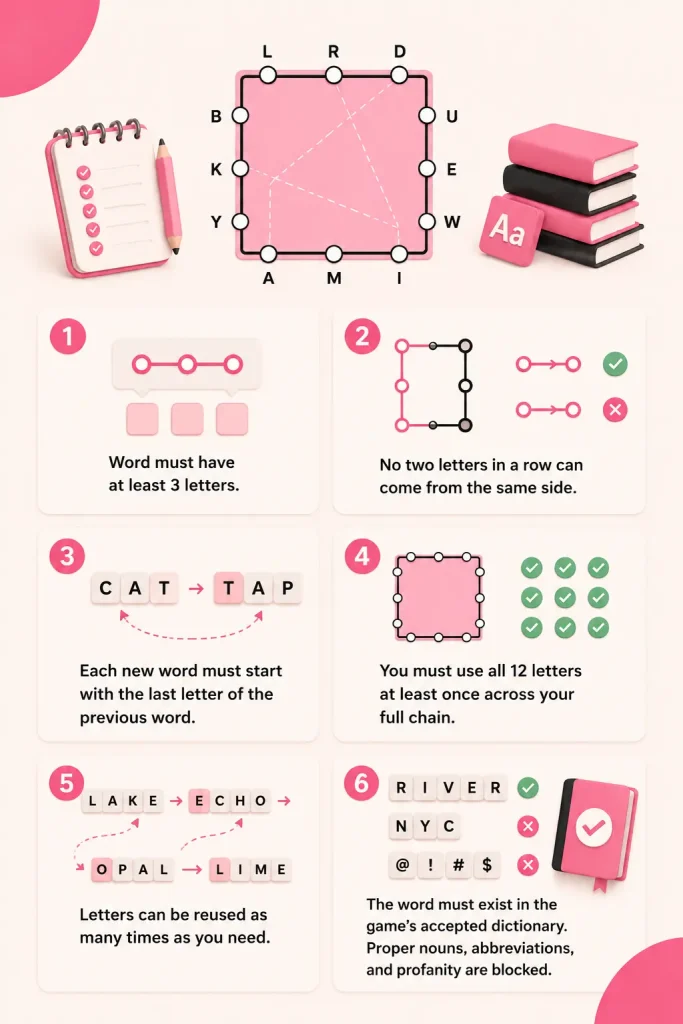
If you are new to the game or need a refresher, here are the six rules that control every puzzle.
Rule 1: Each word must have at least 3 letters.
Rule 2: No two letters in a row can come from the same side of the square.
Rule 3: Each new word must start with the last letter of the previous word.
Rule 4: You must use all 12 letters at least once across your full chain.
Rule 5: Letters can be reused as many times as you need.
Rule 6: The word must exist in the game’s accepted dictionary. Proper nouns, abbreviations, and profanity are blocked.
For a full guide on how to play, strategies, and common mistakes, check our complete Letter Boxed game guide. The original puzzle is part of the NYT Games collection, which sets the standard for daily word puzzles.
Final Thoughts
Letter Boxed is one of those puzzles that seems simple until it suddenly is not. The rules take 30 seconds to learn but the daily puzzle can stump even experienced players. What makes it worth coming back to is that there is always a solution waiting to be found.
The solver gives you a reliable way to get unstuck or check your work. The hints give you a middle path between struggling alone and seeing the full answer. And if you use both tools carefully, over time you will find yourself needing them less because your vocabulary and pattern recognition will start doing the work for you.
Come back tomorrow. There is always a new puzzle waiting.